After clearance: the next 5 to 7 references
The 510(k) went up on the board slide. Then the other three questions landed, often on the founder alone: which code a site bills under, who has heard of the device, and what the value analysis committee will want to see.
Four questions after clearance
- The cleared indications for use. A U.S. Food and Drug Administration (FDA) 510(k) or De Novo, a Health Canada licence or a Conformité Européenne (CE) mark authorizes the device for stated indications in one market, such as the United States or Canada, and every claim stays inside them.
- How a site is paid. Some devices are billed under a procedure code; many are paid inside a bundled hospital payment, such as a Medicare diagnosis-related group (DRG) or ambulatory payment classification (APC), or bought outright from a capital budget.
- Awareness. The clinicians and administrators who need the device hear about it from a peer at one of the first 2 or 3 sites.
- Value. The value analysis committee or the health technology assessment sees evidence that the difference is large enough, and matters enough, to pay for.
The who-pays page covers coding, coverage and payment in the United States and Canada, with the sources.
Why a good demo stalls at the site
The clinical champion puts their name on the device in front of colleagues. The economic buyer weighs it against the installed base, this year’s capital plan and the queue ahead of it. A value analysis committee typically weighs the clinical evidence, the budget impact, the reimbursement path, the group purchasing organization (GPO) contract status, and the training and supply load, and clinical engineering weighs service and integration. That makes four groups at each site, each with its own risk.
So I build one record per stakeholder at each of the first 2 or 3 sites: what pushed them away from the current approach, what pulled them toward the device, which habit held them in place, and what they feared about the change. Those records become the fit rules for the next 5 to 7.
Joint sales calls and debriefs
Before the discovery sprint starts, we set the number of qualified conversations it should produce. I join selected live calls with the founder or the commercial lead, and we debrief after each one: what the person said, what pushed them away from the current approach, what pulled them toward the device, and what held them back.
From those debriefs I build the library of objections and decision triggers, the channel learnings and the target tracker. The company’s team keeps all of it, and each round of calls starts from what the last one taught.
The first 90 days, then channel tests
The first 90 days build the proof, trust and credibility a clinician or an administrator looks for: an evidence page written for clinicians, the cleared indications for use stated plainly, stories from the first sites with their permission, short founder videos, and talks and papers.
Then two-week tests of channel-market fit. Which specialty, which care setting, which message, through which channel (LinkedIn, email, a specialty society meeting or a reference visit), each with its pass mark set before it starts. The company’s team owns product-market fit, and everything the tests learn goes into its product roadmap. The clinician list and the LinkedIn, Google and Meta audiences built before clearance carry into this stage, kept current from public signals: new clearances in the FDA 510(k) database and Health Canada’s licence listing, coverage and billing decisions, hospital tenders and capital plans, job postings and clinician publications. The method page has the full method and the 2016 experiment board.
References in one specialty
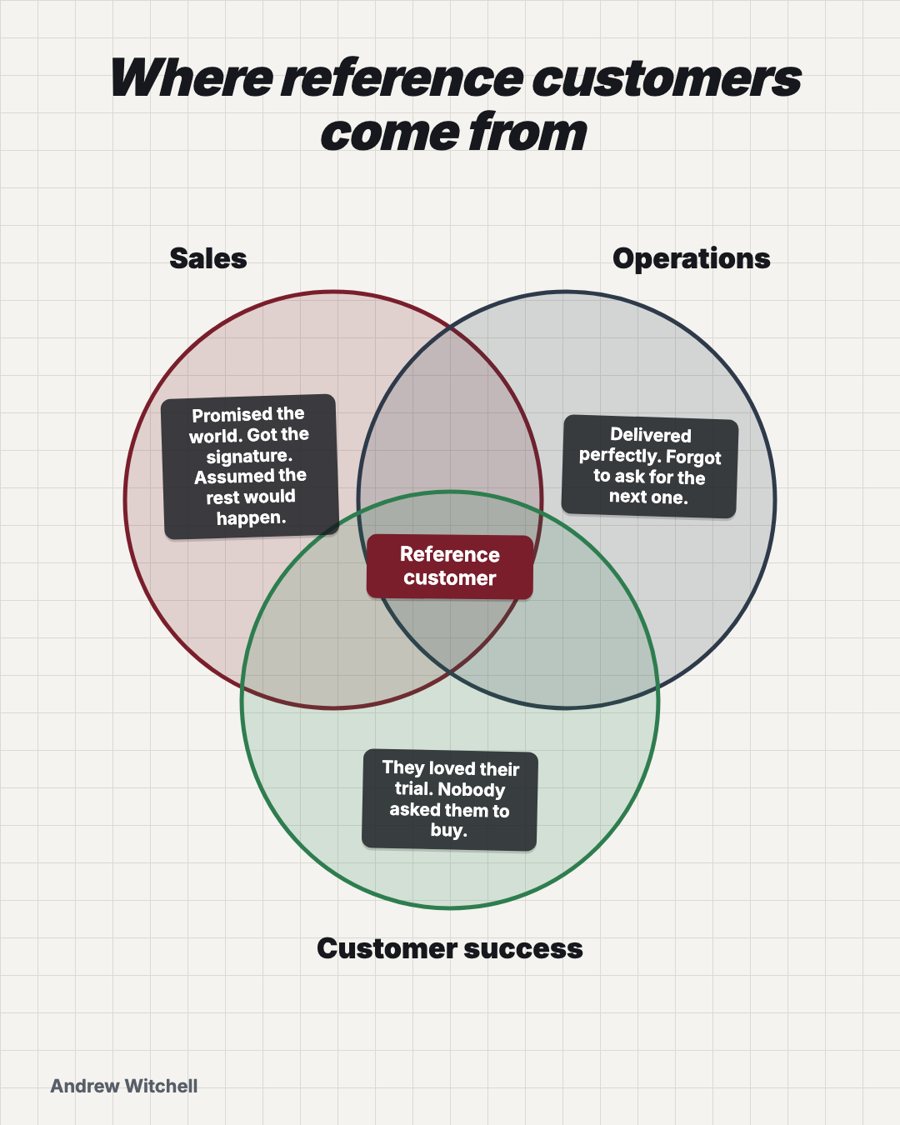
I aim the next 5 to 7 at one specialty first, so the next clinician hears about the device from a peer who does the same work.
A site takes reference calls when its clinical outcomes, its in-service training and its device uptime match what was agreed at purchase.
The work fits a device company cleared or licensed in at least one market, with 2 or 3 paying sites (a paid pilot counts), where the founder or the team lead still takes part in each sale.
A company selling in one market while the next is under review starts with the eight workstreams and the clearance week checklist. A company before clearance everywhere, or with unpaid research collaborations only, starts with the free kit.
The next 5 to 7 reference sites come from understanding why the first 2 or 3 paid: who said yes at each site, what they weighed, and what they risked.
Tell me your origin story
We book 1 to 2 hours. It is recorded, with a mutual non-disclosure agreement in place at booking, so you can talk openly about why you’re building this, the customers, pricing and pipeline decisions that are keeping you up at night. For a device company the agenda adds the four questions after clearance, and the playbook carries one page on what is known, what is unknown and who answers each.
From that session, you’ll get a written playbook, broken into steps your team can actually take.
It costs $25. Basically enough to cover the tokens to analyze our call and build out your report. I’m definitely not making money off this. But I am committed to showing up and using our time well. If the session isn’t worth your hour, I’ll double your refund: $50, as an apology for wasting your time.